Plumfield Moms
We are sisters in Christ who became friends over a shared love of Truth, Goodness, and Beauty, found especially in good and great books. Our primary vocation is that of marriage and motherhood, but we feel a secondary call, as educators and homeschool moms, to walk with families who are seeking to help form souls who are capable of responding to the vocation God has called them to. Our objective is to form our children and grandchildren to the best of our ability, and in so doing share what has been meaningful to us with others that it may encourage them and lighten their burden. As homeschoolers, classical educators and Christians, we have a passion for the ancient Greek paideia and the loving education of Louisa May Alcott‘s Plumfield (from her novel Little Men).
Listen on:









Episodes
Thursday Jan 25, 2024
Thursday Jan 25, 2024
The concentration camps were so horrific that stories about them are usually done with incredible care and some trepidation. When we think of children in the concentration camps, many of us rightly cannot hold that idea in our minds for very long. It is just too awful. Children were there. Most were killed but some were there. But few of us have the fortitude to consider that idea very closely or for very long.
But what about children in the camps? What happened to them? Anne Holm gives us a small window into that idea in I Am David (reprinted as North to Freedom). Mercifully, however, the story opens with a guard telling twelve-year-old David about the escape he has planned for him. David breaks out of a Bulgarian concentration camp in the first few pages, so all of our knowledge about his experiences in the camp comes to us through his memories when he is safely on the other side.
“In his mind’s eye David saw once again the gray bare room he knew so well. He saw the man and was conscious, somewhere in the pit of his stomach, of the hard knot of hate he always felt whenever he saw him. The man’s eyes were small, repulsive, light in color, their expression never changing; his face was gross and fat, yet at the same time square and angular. David had known him all his life, but he never spoke to him more than was necessary to answer his questions; and though he had known his name for as long as he could remember, he never said anything but “the man” when he spoke about him or thought of him. Giving him a name would be like admitting that he knew him; it would place him on an equal footing with the others.”
The guard tells David that when he lights his match, the circuit will be cut and David will have 30 seconds to get across the yard and over the fence. David is baffled by the man’s suggestion that he should escape and is sincerely concerned that the man is setting him up to be shot.
“And then quite suddenly David decided he would do it. He had turned it over in his mind until his head was in a whirl, and he still could not understand why the man had told him to escape. David had no wish to make the attempt: it would only be a question of time before he was caught. But suppose it were a trap and they shot him – it would all be over quickly anyway. If you were fired at while trying to escape, you would be dead within a minute. Yes, David decided to try.”
The man not only provides a means of David’s escape, but he also promises that hidden in the field on the other side of the fence there would be a pouch with a little bread, drinking water, a knife, and a compass. He tells David which way to run and to head for Italy. And, once there, to go North. And just keep going North until he gets to Denmark. He does not say why David must get to Denmark, but he insists on it.
Once David successfully breaks free of the concentration camp, we realize that he has no memory of any life outside of the camp. He has no idea what cities look like, how normal people interact with each other, or what a beautiful mountainside looks like. Every experience is new and terrifying for him. His journey is a bit of a pilgrimage. And he is learning how to be human after only ever being a caged animal. In some haunting ways, he reminds me of Dr. Frankenstein’s monster – hiding in the woods, watching people in order to understand how to be really human.
As he goes along, we learn that David was kept separate from other children in the camp. He grew up in a place where his only companions were men from many different countries, a teenage mentor, and the guards. Consequently, David learned many languages by mimicking all of the men he heard speak. He speaks Oxford English, noble Italian, everyday French, official German, and robust Yiddish. His linguistic abilities serve him well in his journey North through Europe.
At one point, David spends some time with a wealthy Italian family. The mother gives him milk and vitamins. He realizes that in the camp he had been given milk and vitamins. At the time, he thought they were poison meant to keep him weak. In light of the love of this Italian mother for her children, he realizes these were good things. And he ponders why “the man” would have given him good things to make him healthy. He reflects on how everyone in the camp eventually died of starvation-related complaints. And yet, he was being given nourishing milk and smuggled vitamins. Why?
In the camp, David had one friend. A French teen named Johannes who was assigned to be David’s companion and tutor. Johannes died in the camp of a heart attack. Before that, however, Johannes taught David not just languages and history but also ethics and manners. As David journeys North, he realizes that that too did not make any sense. Why had “the man” taken such an interest in David’s education? If everyone was destined to die in the camps, why bother to educate the child and teach him how to be human?
David was not raised with any religion. But, he was not unaware of many of the faiths in the camp. On his trek, he decides that he needs a god to believe in. He remembers a man in the camp praying to the God of green pastures and still waters. Once he sees the beauty of the mountains for the first time, he realizes that that is the God he longs to serve. Without anyone to teach him how to pray, he fumbles his way into a relationship with that God hoping that he has chosen the right one. The storytelling here is excellent. David’s mistakes and his faith are innocent and beautiful and God does not abandon him.
This story has some hard parts, but it does end well. The ending is a bit miraculous but not unbelievable. I would recommend this for a mature middle school reader and above. The context is hard but not graphic. This would be a wonderful first concentration camp story for young readers who are not yet ready for sadder or more devastating classics like The Hiding Place. I think this would be even better than Anne Frank’s The Diary of a Young Girl.
The audio version of this book is excellent. You can learn more about this fascinating book at Biblioguides.com.
There is a dog in this story. If you are concerned about what happens to the dog, please scroll down. If you do not want any spoilers, read no further.
https://plumfieldmoms.com/plumfield-moms-book-reviews/i-am-david-aka-north-to-freedom
Tuesday Jan 23, 2024
Tuesday Jan 23, 2024
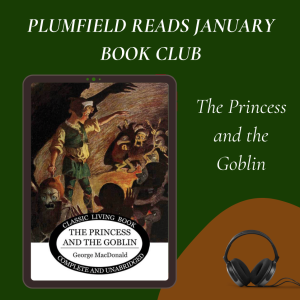
Plumfield Reads Guides: The Princess and the Goblin by George MacDonald
The Princess and the Goblin by George MacDonald
The Princess and Curdie by George MacDonald
The Little White Horse by Elizabeth Goudge
The Mistmantle Chronicles by Margaret I. McAllister
The Chronicles of Narnia by C. S. Lewis
The Glorious Folly by Louis de Wohl
The Inquisitor's Tale by Adam Gidwitz
At the Back of the North Wind by George MacDonald
The Snow Queen by Hans Christian Andersen
J.R.R. Tolkien "On Fairy Stories" on Internet Archive
Various Editions of The Princess and the Goblin
The Biblioguides Online Community
Monday Jan 22, 2024
Monday Jan 22, 2024
A Plumfield Kids Book Review by Jack, age 11This “Real Book About” is a scientific book about Whales. This book is not my favorite book for many reasons, but the main one is that it starts slowly, explaining each and every kind of whale. But even with a slow beginning, it makes up for it in the other half of the book, which is about whaling.
The first half of this book is dedicated to the whale itself. From page thirteen to page twenty-eight, it explains how the whale used to be a ground animal and how it became a sea animal, and how it eats and moves, and that the whale’s nasal passages are not connected to its throat, so the whale can eat under the water and not drown. From page twenty-nine to sixty-six, it explains all the kinds of whales, from the baleen whales to the killer whales.
There are many fascinating and funny facts in this book, even though it has a slow beginning. One of them is that the story of Jonah and the whale is actually possible, and not only is it possible, but it actually happened. It happened to a sailor named James Bartly, who fell overboard and got swallowed alive by a Sperm whale. He was rescued twenty-four hours later when the whale was killed. According to this account, he was a little unbalanced for two weeks. This feat would not be able to be done by a Baleen whale, because its throat is too small, but the Sperm whale’s throat is big enough to swallow a person.
The second half is more interesting than the first half. It tells us about whaling and how the whalers hunted the whale and processed it. There are a lot of quotes from Moby dick because there really are no reports of whaling.
I liked this book, but it is not my favorite. I wasn’t a big fan of, and didn’t know much about whales and whaling, but since I read this book I have liked and appreciated it more than I did before. I hope that you will like this book more than I did.
You can learn more about this book at Biblioguides.com. You can purchase this book as a used book at Amazon.
Saturday Jan 20, 2024
Saturday Jan 20, 2024
"It’s plain that Jesus wants us to understand how much we matter to God. But another aspect to his command is just as important. Our anxiety doesn’t change anything except our state of mind. In Luke 12:25, Jesus says, 'And which of you by being anxious can add a single hour to his span of life?'
"Jesus goes on to say, “If then you are not able to do as small a thing as that, why are you anxious about the rest?” As small a thing as what? Adding an hour to my life is a small thing? To him, it is! To me, this is the heart of the command. Jesus isn’t suggesting that we would be better off to stop worrying. He is not only telling us how absolutely futile worrying is, he is also telling us how utterly and completely he is in control."
Monday Jan 15, 2024
Monday Jan 15, 2024
Who among us does not know about Harry Potter? Love, fear, or hate him, we all know something about Harry Potter, because he is very much a part of our culture. Few books of our age have caused as much controversy as those about “the boy who lived” because of the sacrificial love of a mother.
Teachers love Harry Potter because their students will read thousands of pages of well-written narrative in lieu of playing video games. Libraries love Harry Potter because the books have wide appeal and are routinely checked out again and again by repeat readers because they are so enjoyable to read more than once. Vendors love Harry Potter because of all of the merchandising opportunities. Parents love Harry Potter because their kids are reading. And, some Christians love Harry Potter because the story is steeped in characters who exemplify virtue and who act courageously.
But Harry Potter is not loved by all. In fact, he is despised and feared by many. Large groups of Christians chief among them.
This article is not about the worthiness or lack thereof of Harry Potter. My own personal opinions on this series are still being formed. But I think it is important to mention that I am a devout Catholic Christian with traditional values and a great deal of sensitivity to the power of story. I have no use for the Netflix travesty which ruined Anne of Green Gables. I wrote a piece on the Handmaid’s Tale which garnered thousands of views and horrible hate mail. And, despite the recommendations of friends I love and respect, I think that The Incorrigible Children of Ashton Place is problematic, that the Penderwicks books are lacking, and Percy Jackson is prohibited in my home. I think it is safe to say that I am extremely conservative but also, I hope, a thoughtful reader.
Typically, a reader of old books, I view new books with quite a bit of skepticism. With regard to the Harry Potter books, I read them as a young adult, and I loved them. As I became more formed in my faith and my reading taste, I began to understand some of the concerns that others had about them. As a young mother, I was at a loss for what to do with Harry Potter.
This book articulates the primary objections and concerns that Christian families may have with regard to Harry and responds to them with commentary from other critics, evidence from the text, and good research. I am incredibly grateful for that!
I am not sure that I agree with all of Mrs. Brown’s arguments. And I am not suggesting that every reader will either. But I am exceedingly grateful for this text and am happy to have it in my library for other families to consider.
How did we resolve the Harry question for our family? We delayed inviting our children into the world of Harry Potter. And by the time we did, they had so many other books and series they loved more, that none of my children have ever cared to read more than a couple of the books.
Several years ago, when I was falling in love with Chesterton, I discovered Nancy Brown. Mrs. Brown is a Chesterton scholar and has written a biography on Frances Chesterton as well as some children’s adaptations of Father Brown. In my discovery of her work, I discovered a marvelous little book that she wrote called The Mystery of Harry Potter: A Catholic Family Guide. This is what I wanted! I wanted someone who was well formed in my faith to take me by the hand and to help me understand the spiritual concerns with the Harry Potter books and then give me enough information about the books and about reliable Catholic commentary so that my husband and I could prayerfully discern how to handle the books with our family.
https://plumfieldmoms.com/plumfield-moms-book-reviews/the-mystery-of-harry-potter
Saturday Jan 13, 2024
Saturday Jan 13, 2024
Forgetting our own nature, it’s easy to find ourselves baffled by the behavior of the Israelites. How did the same people who saw the mighty works of God during the time of the exodus so quickly forget their experience, come to doubt God’s power, and reject the way of obedience?

Monday Jan 08, 2024
Monday Jan 08, 2024
State of the Podcast 2024
2023 State of the Podcast
Resistance by Jennifer A. Nielsen
Plumfield Library Page
Purple House Press: Buzztail and Leeper by Robert McClung
Louisa May Alcott
The Card Catalog - Shelf Notes Newsletter
Our Librarian Life
Private Lending Library Directory at Biblioguides
Meet Michelle Howard Episode
What is a Living Book? Video with Michelle Howard
The Faithful Spy by John Hendrix
Caroline Haywood
Further Up and Further In by Diane Pendergraft
Plumfield Moms Book Club Guides
The Winged Watchmancad by Hilda van Stockum
The Princess and the Goblin Book Club Guide (Free for subscribers!)
The Princess and the Goblin by George MacDonald
Gary D. Schmidt
Smidgen Press - Frankenstein by Mary Shelley
Smidgen Press - Little Men by Louisa May Alcott
Monday Jan 08, 2024
Monday Jan 08, 2024
In a genre that really tests our limits to endure the dehumanization and suffering of others, this text stands out as entirely different. WWII Holocaust literature is critically important to the story of Western Civilization, and it is essential that we all have a few titles get through us so that we never forget what hate and godlessness can do to entire nations.
While The Hiding Place has some genuinely tough passages, it is totally unique in that it is never, ever hopeless. The very worst moments are lightened by the beautiful witness of Betsey, who truly understands the Gospel.
Like the Old Testament lamp that never ran out of oil and the Ravensbruck vitamin bottle that never ran out of medicine until new medicine was provided, this story is miraculous in its ability to keep you filled with just enough hope and just enough awe to keep reading without feeling gutted.
To be thankful for the fleas – because they provided incredible, miraculous protection from something much worse – is the epitome of the message of the Ten Booms and their beautiful true story.
To the reader who does not think they can read one more Holocaust book, I understand. I resisted this one for years. Now I understand. I wish that I had read this at the same time that I had read In My Hands and others – it would have given me a healthier helping of hope. Most of this book is not about the concentration camps. Most of this story is about real people and their real lives before, during, and after the war.
This is a classic. A healing and hopeful classic.
https://plumfieldmoms.com/plumfield-moms-book-reviews/the-hiding-place
Saturday Jan 06, 2024
Saturday Jan 06, 2024
Paul’s autobiography would have made for exciting reading, and he could easily have satisfied the current demand that every book be part of a series. He had three separate shipwreck stories. Those usually make for good reading. Then there were imprisonments, beatings, and a stoning incident. How does one survive and recover from 39 lashes? Paul did it five times!
Wednesday Jan 03, 2024
Wednesday Jan 03, 2024
“For we are his workmanship, created in Christ Jesus for good works, which God prepared beforehand, that we should walk in them” (Eph. 2:10 ESV).
What’s all this for? In Christ we are being built together into a dwelling place for God (Eph. 2:22 ESV). Apostles, prophets, evangelists, shepherds, and teachers are given to equip the saints for the work of ministry, for building up the body of Christ (Eph. 4:12 ESV). When each part of the body is working to full capacity, it grows so that it builds itself up in love (Eph. 4:16 ESV). Our speech should be only what is good for building up (Eph. 4:29 ESV). There is a lot of work going on here.